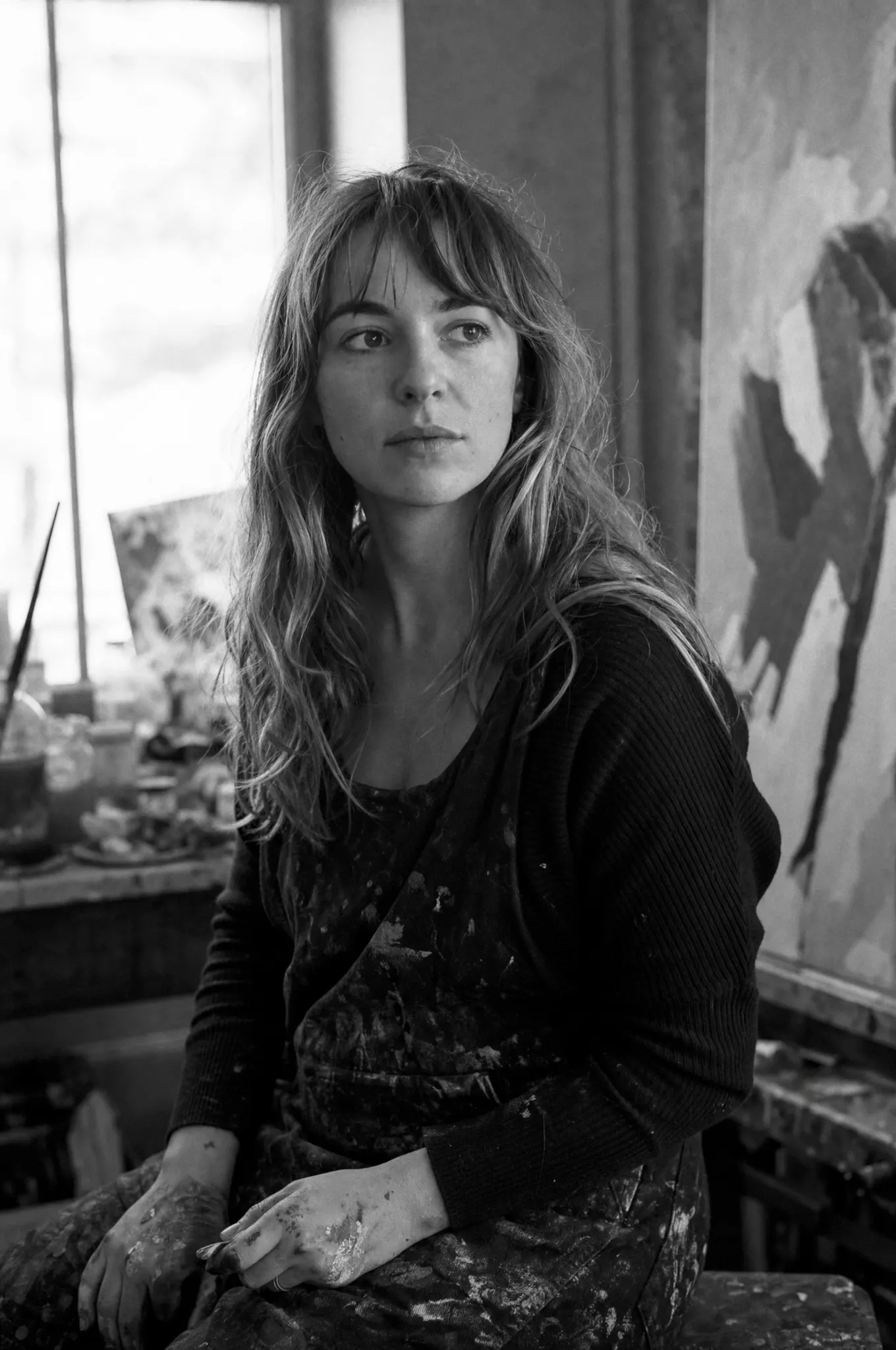
The studio keeps the bones of the corner grocery it used to be. The shelving is long gone, but the ghost of a painted sign still crosses the brick above the door. Inside, the room is plain. A long working wall. A steel table scarred by palette knives. Jars of cold wax medium lined up on a sill like preserves. Two tall windows let in north light, which Elena Marlowe prefers because it does not flatter anything. She works standing, most mornings from seven until noon, and she works in silence.
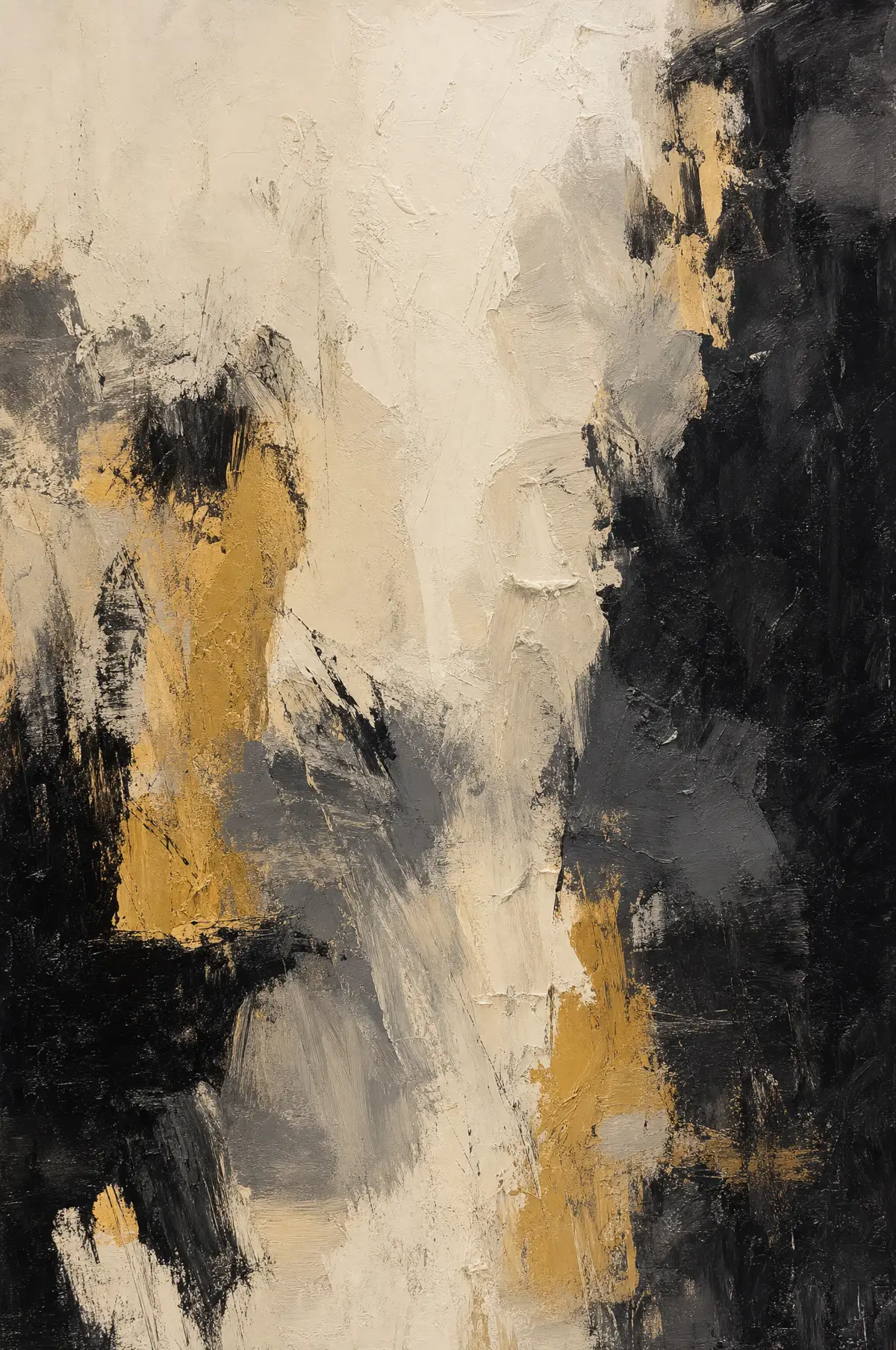
She begins with what she calls the bed. Oil paint is cut with cold wax until it moves like soft butter, then pulled across the surface in a single pass with a wide steel blade. The film dries. She lays another over it, and another. Some paintings carry more than twenty of these films before she is finished, and almost none survive intact. Most of her hours are spent taking paint away: scraping, sanding, dissolving an edge with a rag, drawing back through the surface to a color she buried weeks earlier. What remains carries the memory of everything it used to be.
The conservator's hand
The habit has a history. Before she painted, Marlowe trained in conservation and spent nine years repairing other people's pictures. She learned to read a surface from underneath, and she can tell how a painting was made by the way it fails. That training still governs the work. Her old tools stay within reach on the steel table, and she treats each of her own panels partly as an object under examination, something to be uncovered rather than declared.
Her palette is small and exact. A particular ochre stands in for her grandmother's kitchen. A bruised violet is the hour after a funeral. She mixes each color by hand and keeps written notes on every batch, the way her mother, who restored old photographs for a living, kept notes on every face she brought back. Color, in this studio, is a filing system for feeling, each mixture holding a name only she can read.
A painting is finished when there is nothing left to explain.
On the working wall that morning hung a square panel, unnamed, in its fourth week. Near it leaned Threshold (No. 4), finished in 2024 and waiting to be crated. The largest work of the past year, Esplanade, Late, had already left the room. She spoke about all three the same way, quietly and without ceremony, as stages of one long attempt rather than separate achievements. When a passage goes well, she said, it usually means she stopped just before the point where she would have explained it.
What the paintings hold
Marlowe grew up in a shotgun house off Esplanade, rooms opening one into the next, so that a feeling could travel the whole length of the house before anyone named it. The paintings work the same way. Stand close and the scraped layers read like weather. Step back and the surface settles into a single tone, an ochre or a violet holding steady, the way a room holds the weight of someone who has just left it.
She says she is trying to keep the parts of a life that do not photograph. The sound of a screen door. The light of a kitchen at five in the afternoon. The work asks for patience, and it repays the kind of looking that has no schedule. By noon the light had moved off the wall. She set the blade down and let the day's films dry.